Bromo Ijen Tour from Banyuwangi
Most travelers tackle East Java the other way around. They fly into Surabaya, get tossed around in a 4WD jeep across the Bromo ash plains, and drag their tired bones eastward until they fall across the Bali Strait. Doing the reverse with an ijen bromo tour from banyuwangi flips the entire experience on its head. You step off the ferry at Ketapang or catch a regional flight into Banyuwangi's small green terminal, hit the steepest climb while your legs are still fresh, and travel west toward Surabaya or Malang.
It is an intense trip. You will sleep very little across 48 hours, breathe sulfuric fumes through a rubber respirator, and shake black sand out of your socks for days. Having run this route in both directions over the years, starting from the eastern tip of Java has become my favorite way to show people the volcanoes.
Why Starting from Banyuwangi Makes Travel Sense
Geography works in your favor here. If you are already vacationing in Bali, getting to Banyuwangi takes only a short drive to Gilimanuk and a 45-minute ferry crossing. You avoid back-tracking across the island. Booking a bromo ijen tour from bali often picks you up right at your hotel in Ubud or Canggu, dropping you directly into Banyuwangi by late afternoon without wasting an entire day in transit.
The physical demand is the real reason to start here. Mount Ijen requires a steep 3-kilometer hike straight uphill on loose dirt, usually starting around 1:30 AM. Tackling that grade on your first night when your energy is intact makes a massive difference. Bromo, by comparison, is far gentler on the knees. At Bromo, the jeep delivers you right to the viewpoint, leaving you with just a short staircase climb to the crater rim the following morning.
Banyuwangi itself has grown into a charming base. Ten years ago, it was just a gritty port town where nobody lingered. Now, the small neighborhoods near Karangasem train station hide great little coffee shops, homestays surrounded by rice paddies, and night markets serving grilled fish with spicy sambal tempong.
Pro tip: Pick a homestay near Licin village if you want to sleep an extra 45 minutes before the night hike to Paltuding, rather than staying down near the ferry port.
Book your bromo ijen tours experience:
Itinerary Options: 2 Days vs 3 Days
Choosing your pace dictates how exhausted you will feel at the end. An ijen banyuwangi to bromo tours 2 days package runs on pure adrenaline and black coffee.
On the 2-day schedule, you wake up around midnight in Banyuwangi, trek Ijen to see the blue fire, head back down the mountain by 7:00 AM, shower quickly, and sit in a car for six hours to reach Cemoro Lawang near Mount Bromo. You sleep for three or four hours, wake up at 3:00 AM for the Bromo sunrise, peer into the smoking caldera, and head straight out to Surabaya or Probolinggo. It is brutal, cheap, and wildly efficient.
If you have extra time, stretch it out. A banyuwangi to ijen tours bromo tours-surabaya 3d itinerary lets you break the long drive between the volcanoes with stops at hidden waterfalls like Madakaripura, or simply grants you an afternoon nap in Cemoro Lawang while watching fog roll through the sea of sand.
- 2D1N Express: best for weekend travelers and backpackers on tight flight schedules who can handle staying awake on bumpy roads.
- 3D2N Classic: offers sanity, daylight hours to actually see the Javanese countryside, and time to clean sulfur soot out of your gear.
- 3D2N with Bali return: completes the volcano loop and deposits you back at the Gilimanuk harbor by evening.
Note: Ijen crater closes every first Friday of the month for environmental cleanups, and volcanic activity levels can shut down descents to the blue fire with zero notice.
Route Comparison and Logistics
Every banyuwangi tour ijen bromo follows the same spine of the East Java highway, yet the vehicle choice and pace vary wildly. Public transport is theoretically possible, but piecing together local bemo minivans, regional trains, and shared village jeeps will chew up three days just waiting at roadside intersections.
Most travelers either join an open shared group or hire an mt bromo and ijen banyuwangi private tour. Going private means leaving Paltuding the moment you walk down the trail, stopping whenever you want fresh fruit along the coastal highway, and choosing your own departure time for the Bromo viewpoints.
| Tour Style | Duration | Key Advantages | Rough Price (IDR) |
|---|---|---|---|
| Shared Group Backpacker | 2D / 1N | Lowest upfront cost, meet other travelers | 850,000 - 1,250,000 |
| Standard Private Tour | 2D / 1N | Custom schedule, private car, door-to-door transfer | 2,400,000 - 3,500,000 |
| Extended Private Overland | 3D / 2N | Includes Madakaripura waterfall, slower pace | 3,800,000 - 5,200,000 |
| Probolinggo Drop Route | 2D / 1N | Ideal for catching the morning train to Yogyakarta | 1,900,000 - 2,800,000 |
The road between Banyuwangi and Bromo curves past the northern coast near Situbondo. You will stare out at fishing outriggers lined up on black beaches, endless tobacco fields drying in the tropical sun, and massive coal power plants sitting directly on the shoreline. It smells like sea salt, clove cigarettes, and wet asphalt.
Book your bromo ijen tours experience:
What to Expect on Mount Ijen
Paltuding base camp is a damp, chaotic clearing in the jungle. At 1:30 AM, it swarms with hundreds of hikers drinking sweet ginger tea around wood fires while local guides adjust rubber gas masks. The chill in the air disappears roughly ten minutes after you start walking. The first two kilometers are relentless dirt incline with very few switchbacks.
You will hear the trolley pushers before you see them. Local sulfur miners push heavy wooden handcarts up and down the mountain, offering rides to exhausted tourists for around IDR 700,000. It feels strange seeing someone haul another human up a mountain, but for the miners, it pays significantly better than hauling heavy sulfur slabs from the belly of the crater.
The blue fire happens down inside the caldera. Liquid sulfur ignites upon meeting oxygen at temperatures above 360 degrees Celsius, producing neon electric flames that flicker against the pitch-black rock. You need a properly fitted respirator with organic vapor filters. Cheap paper surgical masks are utterly useless when a sudden shift in wind blasts a dense cloud of sulfur dioxide into your face.
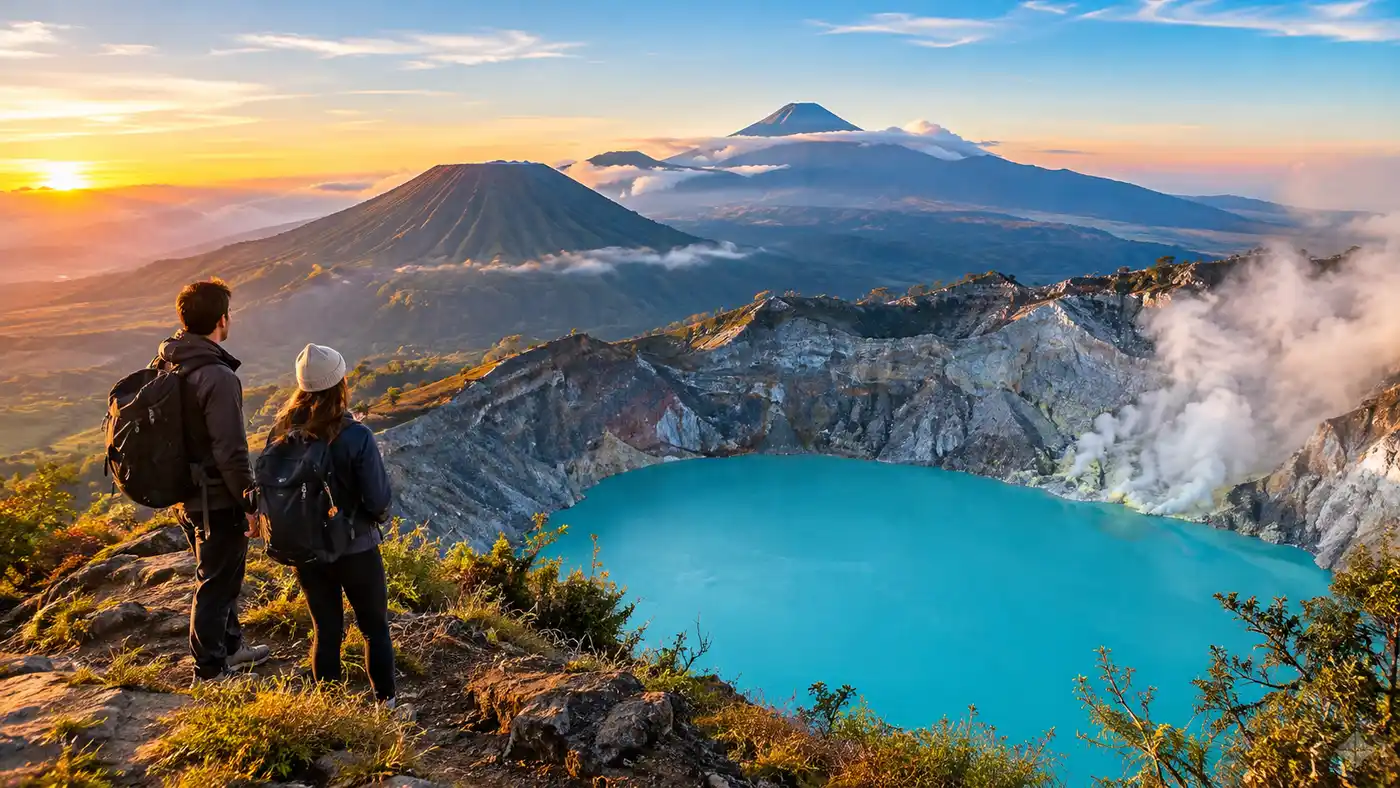
When the sun comes up, the horror of the dark turns into sheer wonder. The crater lake is turquoise, glowing like radiator fluid inside sheer bleached cliffs. It is acidic enough to dissolve a tin can in thirty minutes, though the steam rising off the surface looks entirely peaceful in morning light.
Crossing to Mount Bromo
Leaving Ijen behind, the drive westward to Bromo takes roughly six hours. Your body will feel shattered. Sleeping in the passenger seat of an Avanza while the driver overtakes slow-moving sugar cane trucks is an acquired skill, honestly.
You eventually climb into the Tengger mountains, where the tropical foliage gives way to giant cabbages, pines, and onion terraces hugging impossibly steep mountain walls. The air temperature plummets. Cemoro Lawang, the village sitting on the lip of the caldera, sits around 2,200 meters above sea level. It gets cold enough at night that frost coats the corrugated metal roofs during dry season.
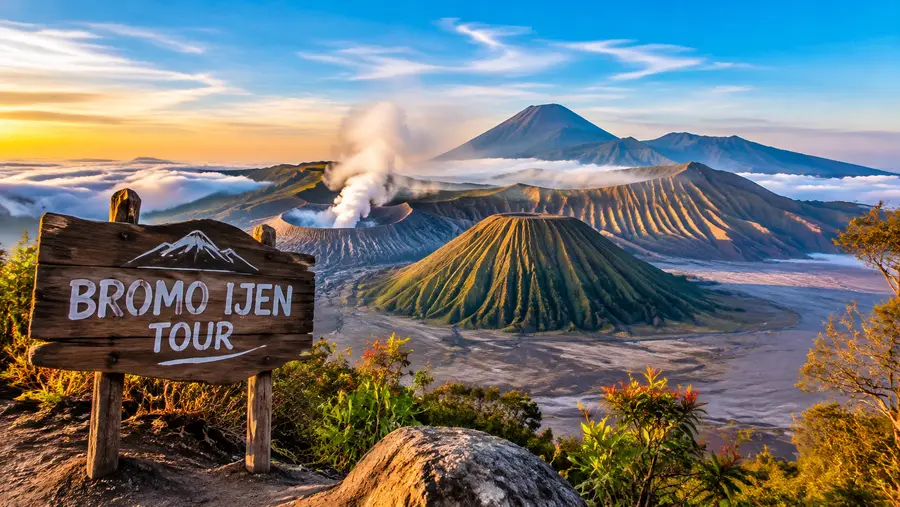
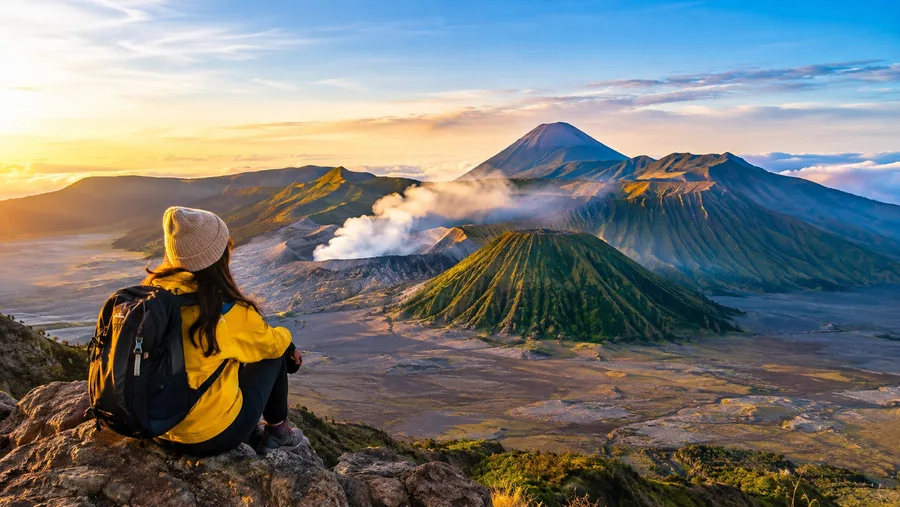
Wake-up call comes early again. Jeep convoys leave the village around 3:15 AM to crawl up toward King Kong Hill or Seruni Point for sunrise. While hundreds of tourists crowd the viewing decks snapping identical photos, the true spectacle is watching the shadow of Mount Semeru slowly stretch across the Sea of Sand below.
Walking the caldera floor toward Bromo feels like wandering on the moon. The sand muffles your footsteps. The volcano groans with a deep, subsonic rumble that vibrates in your chest before you even climb the concrete staircase to the steaming rim.
Packing Essentials for the Journey
Packing for this trip is tricky because you cycle through sweaty tropical heat, freezing mountain peaks, and corrosive volcanic gas within forty-eight hours.
- Warm layers: a lightweight packable down jacket, fleece, and a beanie for early mornings at Bromo viewpoints where temperatures often hover near 4 degrees Celsius.
- Headlamp: needed for navigating the loose rocks on Ijen in complete darkness, keeping your hands free.
- Good shoes: trail runners or hiking boots with aggressive tread because the dust on both mountains turns hard ground into slick ball bearings.
- Cash in small bills: ATMs in Cemoro Lawang frequently run dry or reject foreign cards, and local warungs do not take plastic.
- Eye drops and wet wipes: sulfur dust burns your eyes, while fine volcanic ash from the Tengger sand sea clings to every inch of exposed skin.
Frequently Asked Questions about ijen bromo tour from banyuwangi
Can I do this tour without a guide?
You can technically visit Bromo on your own using public minivans from Probolinggo, but Ijen now strictly mandates hiring a certified local guide at the Paltuding ranger station before entering the trail. Going completely self-guided across both mountains without private transport will double your transit time.
How difficult is the hike at Ijen?
The first two kilometers are steep and physically demanding on the calves. The scramble down into the crater over rocky scree requires steady balance and careful footing in total darkness. Anyone with average fitness can manage it by taking slow breaks, but it is not a casual stroll.
Where should I get dropped off at the end?
Most travelers choose Surabaya for international flights, Malang for scenic colonial culture, or Probolinggo train station to continue westward across Java toward Yogyakarta.
Quick Reference
- Distance covered: ~320 km across East Java
- Lowest temperature: 4°C at Bromo sunrise
- Ijen hike start: 1:30 AM to 2:00 AM
- Best weather months: May through September
Book your bromo ijen tours experience:
My Take: Flipping the Route
Running an East Java volcano trip starting in Banyuwangi cuts out pointless backtracking, matches the natural flow of anyone moving westward out of Bali, and hits the toughest mountain while you still have stamina. You will finish the trip thoroughly exhausted, smelling faintly of sulfur, with volcanic grit in your camera lenses. You will also have stood on the lip of an active caldera under a sky full of shooting stars, which makes every sleepless hour completely worthwhile. If you are plotting your overland route through Indonesia, book the car, pack the warm jacket, and cross that ferry.
Read more about bromo ijen tours.